The Royal View
The Royal View is an editorial space where Royal shares his personal perspectives and reflections on both present issues and past experiences, offering thoughtful insight on leadership, community, and the lessons that shape how we understand the world.
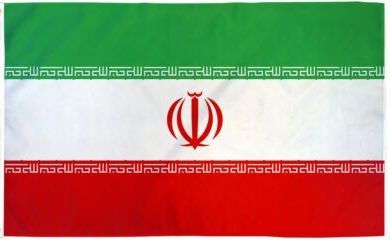
Iran and Hezbollah-Hamas-Houthis.
Iran has played a significant role in supporting three of the most influential non-state armed groups in the Middle East: Hezbollah in Lebanon, Hamas in the Palestinian territories, and the Houthis in Yemen. While each organization has its own history, ideology, and local objectives, Iran has provided varying levels of financial assistance, weapons, training, intelligence, and political backing to all three. Understanding the distinctions between these groups is important because they are often discussed together despite having different origins, religious affiliations, and roles in regional conflicts. Below is a brief overview of each organization, its history, and its relationship with Iran.
Hezbollah-
Is a Lebanese Shiite Islamist political movement and armed organization that emerged in 1982 during the Lebanese Civil War and following Israel's invasion of Lebanon. Its creation was heavily influenced by Iran's 1979 Islamic Revolution, and members of the Islamic Revolutionary Guard Corps (IRGC) helped organize, train, and support the new group in Lebanon's Bekaa Valley. Hezbollah's stated goals included resisting Israeli military forces in Lebanon, advancing the ideals of Iran's Islamic Revolution, and increasing the political influence of Lebanon's Shiite Muslim community.
Hezbollah first gained international notoriety in the early 1980s through a series of attacks on Western targets. The most significant was the October 23, 1983, bombing of the U.S. Marine barracks in Beirut, which killed 241 U.S. service members, along with a nearly simultaneous attack on French military barracks that killed 58 French paratroopers. U.S. authorities have long attributed the attacks to Hezbollah operatives acting with Iranian support. The organization has also been linked to kidnappings of Western hostages and other attacks during the Lebanese Civil War.
Throughout the late 1980s and 1990s, Hezbollah evolved into both an armed movement and a political party. It built an extensive social services network, including schools, hospitals, charities, and reconstruction programs, particularly in predominantly Shiite areas of Lebanon. This combination of military, political, and social activities helped the group gain significant support among portions of Lebanon's Shiite population.
In 2000, Israel withdrew its forces from southern Lebanon after an 18-year occupation. Hezbollah claimed this withdrawal as a major victory, strengthening its reputation and political standing. However, tensions with Israel continued, culminating in the 2006 Lebanon War, a 34-day conflict that began after Hezbollah fighters crossed the border, killed several Israeli soldiers, and captured two others. The war caused widespread destruction in Lebanon and northern Israel, and although both sides claimed success, Hezbollah emerged with its military capabilities largely intact.
Over the past two decades, Hezbollah has significantly expanded its military capabilities. It is widely believed to possess tens of thousands of rockets and missiles of varying ranges, along with drones and sophisticated anti-tank weapons. It has also developed specialized military units and has gained combat experience by supporting the government of Bashar al-Assad during the Syrian Civil War beginning in 2012.
Iran remains Hezbollah's principal financial, military, and political backer. U.S. and other Western government assessments have estimated that Iran has provided the group with hundreds of millions of dollars annually, in addition to weapons, training, and intelligence support. Hezbollah also raises funds through donations, legitimate businesses, and, according to multiple governments, illicit financial networks.
Today, Hezbollah is headquartered in Lebanon, with its strongest influence in southern Lebanon, Beirut's southern suburbs, and parts of the Bekaa Valley. It is represented in Lebanon's parliament and has held cabinet positions while simultaneously maintaining an independent armed force outside the direct control of the Lebanese state.
The organization's status varies internationally. The United States, along with several other countries, designates Hezbollah in its entirety as a foreign terrorist organization. Some countries distinguish between its political and military wings, while others have moved to designate the entire organization. Over more than four decades, Hezbollah has remained one of the Middle East's most influential non-state armed groups, playing a major role in Lebanese politics, regional conflicts, and the long-running confrontation between Iran and Israel.
Hamas-
Is a Palestinian Sunni Islamist movement that was founded in 1987 during the First Intifada, a Palestinian uprising against Israeli rule in the Gaza Strip and the West Bank. The group's name is an acronym for Harakat al-Muqawama al-Islamiyya (Islamic Resistance Movement). It grew out of the Palestinian branch of the Muslim Brotherhood, combining social welfare activities, political organizing, and armed resistance. Its founding charter called for the establishment of an Islamic Palestinian state and rejected Israel's existence, though Hamas has made various political statements over time that have differed in tone from its original charter.
During its early years, Hamas built support through mosques, schools, charities, healthcare clinics, and social service programs, particularly in the Gaza Strip. At the same time, it developed an armed wing, the Izz ad-Din al-Qassam Brigades, which carried out attacks against Israeli military targets and civilians. Throughout the 1990s and early 2000s, Hamas became known internationally for suicide bombings, shootings, and rocket attacks, particularly during the First and Second Intifadas.
In 2006, Hamas won a majority of seats in the Palestinian Legislative Council elections, defeating the long-dominant Fatah. Tensions between Hamas and Fatah escalated into armed conflict, and in 2007, Hamas took control of the Gaza Strip by force. Since then, Hamas has governed Gaza, while the Palestinian Authority, led by Fatah, has administered parts of the West Bank. Following Hamas's takeover, Israel and Egypt imposed varying degrees of restrictions on Gaza's borders, citing security concerns.
Over the past two decades, Hamas has fought multiple wars and major rounds of fighting with Israel, including conflicts in 2008–09, 2012, 2014, 2021, and subsequent escalations. Hamas has relied on rockets, mortars, tunnels, drones, and other weapons, while Israel has responded with airstrikes, ground operations, and other military actions. These conflicts have caused significant casualties and destruction in both Israel and Gaza, with civilians on both sides affected.
On October 7, 2023, Hamas launched its largest attack against Israel since its founding. Thousands of rockets were fired, and Hamas-led fighters crossed into southern Israel, attacking military bases and civilian communities. Approximately 1,200 people were killed, most of them civilians, and around 250 people were taken hostage, according to Israeli authorities. Israel responded by declaring war and launching a large-scale military campaign in Gaza aimed at dismantling Hamas. The ensuing conflict resulted in widespread destruction in Gaza, a severe humanitarian crisis, and tens of thousands of reported deaths, according to Gaza health authorities, while Israel has stated that many Hamas fighters were among those killed.
Hamas has received financial, military, and political support from several foreign actors over the years. Iran has been one of its most significant military backers, providing funding, weapons, training, and technical assistance, particularly to Hamas's military wing. Hamas has also received varying levels of support from other regional governments and private donors at different times, though these relationships have shifted with regional politics.
Today, Hamas remains based primarily in the Gaza Strip, though some of its political leadership has operated from other countries in the Middle East. It continues to function as the de facto governing authority in Gaza and as an armed organization engaged in conflict with Israel. At the same time, it is important to distinguish Hamas from the broader Palestinian population. Hamas does not represent all Palestinians in Gaza or elsewhere. Palestinians hold a wide range of political beliefs, and many civilians in Gaza have no affiliation with Hamas or its military activities. The people of Gaza include men, women, and children who have lived through decades of conflict and often have little or no ability to influence the decisions or actions of Hamas. Distinguishing between Hamas as an organization and the broader Palestinian civilian population is essential to understanding the conflict.
The United States, the European Union, the United Kingdom, Canada, Japan, and several other countries designate Hamas as a terrorist organization. Some governments distinguish between its political and military structures, while others designate the organization in its entirety. Over nearly four decades, Hamas has remained one of the central actors in the Israeli-Palestinian conflict, combining governance, political activity, and armed resistance in ways that have made it both influential and highly controversial.
The Houthis-
Officially known as Ansar Allah ("Supporters of God"), are a Yemeni political and armed movement that emerged in the 1990s in northern Yemen. The group traces its origins to a religious and cultural revival movement among members of Yemen's Zaydi Shiite community, a branch of Shiite Islam that has historically been concentrated in northwestern Yemen. It was founded by Hussein Badreddin al-Houthi, from whom the movement takes its name. Initially, the group focused on religious education and opposition to what it viewed as corruption within the Yemeni government and increasing foreign influence in Yemen.
Tensions between the Houthis and the Yemeni government escalated into a series of conflicts beginning in 2004, when Hussein al-Houthi was killed by government forces. Between 2004 and 2010, the Houthis fought six wars against the Yemeni government in northern Yemen. During this period, the movement transformed from a localized insurgency into a well-organized military and political force.
The Houthis gained international prominence during Yemen's political upheaval following the Arab Spring in 2011. In 2014, the group seized Yemen's capital, Sanaa, with the support of military units loyal to former President Ali Abdullah Saleh. By early 2015, they had effectively taken control of much of northern Yemen, prompting President Abdrabbuh Mansur Hadi to flee the country.
In March 2015, a Saudi Arabia-led coalition, supported by several Arab states and backed by the United States and other Western partners in various capacities, launched a military intervention to restore Yemen's internationally recognized government. The resulting civil war has become one of the world's worst humanitarian crises, causing hundreds of thousands of deaths—both direct and indirect—through combat, disease, and famine, while displacing millions of Yemenis.
Over the past decade, the Houthis have developed increasingly sophisticated military capabilities. They have employed ballistic missiles, cruise missiles, armed drones, naval drones, and anti-ship missiles against targets in Yemen, Saudi Arabia, the United Arab Emirates, and commercial shipping in the Red Sea. Following the outbreak of the Israel-Hamas war in October 2023, the Houthis began launching missiles and drones toward Israel and attacking commercial vessels they said were linked to Israel or its allies, disrupting one of the world's busiest shipping routes and prompting military responses from the United States and allied nations.
Iran is widely regarded by the United States, the United Nations, and many international analysts as the Houthis' principal external supporter, providing varying levels of weapons, military technology, training, intelligence, and financial assistance. Iran acknowledges political support for the movement but has disputed some allegations regarding the extent of its military involvement.
Today, the Houthis control much of northwestern Yemen, including Sanaa, where the majority of Yemen's population resides. They administer governmental institutions, collect taxes, provide some public services, and maintain a substantial armed force while continuing to fight Yemen's internationally recognized government.
It is important to distinguish the Houthis from the broader Yemeni population. The Houthis do not represent all Yemenis, nor do they represent all Zaydi Muslims. Yemen is home to diverse political, tribal, and religious communities with differing views about the conflict. Millions of Yemeni civilians have endured years of war, economic collapse, and humanitarian hardship, often with little ability to influence the decisions or actions of the Houthi leadership or any of the other parties to the conflict.
The United States designates the Houthis as a Foreign Terrorist Organization, while other countries and international organizations have taken varying legal approaches. Over the past three decades, the Houthis have evolved from a regional insurgent movement into one of the Middle East's most influential non-state armed groups, playing a central role in Yemen's ongoing conflict and in broader regional tensions involving Iran, Saudi Arabia, Israel, and the United States.
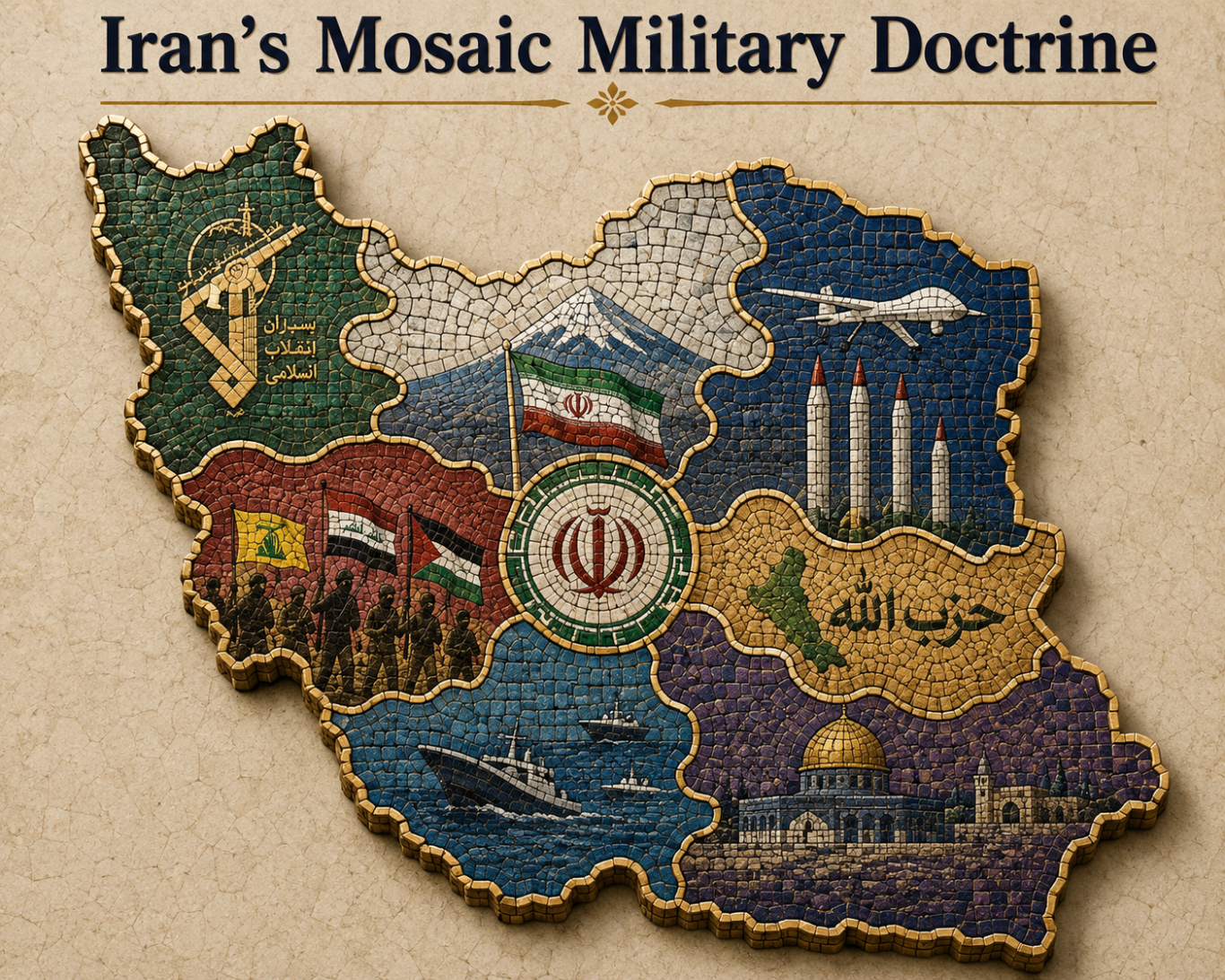
Following the U.S. military campaigns in Iraq and Afghanistan, Iranian military leaders conducted an extensive assessment of how the United States fought modern wars. Beginning after the 2003 invasion of Iraq, Iranian planners spent the next several years studying America's overwhelming battlefield successes in both Iraq and Afghanistan. They carefully analyzed how U.S. forces combined air superiority, precision-guided munitions, intelligence collection, surveillance, logistics, cyber capabilities, and rapid force projection to dismantle conventional militaries in a matter of weeks. Iranian strategists concluded that attempting to defeat the United States in a traditional, head-to-head conflict would almost certainly result in catastrophic losses.
Rather than trying to build a military capable of matching the United States tank for tank or aircraft for aircraft, Iran pursued a fundamentally different strategy. Between the mid-2000s and the late 2000s, military planners implemented reforms that evolved into what is commonly known as the Mosaic Defense doctrine. Instead of relying on a centralized command structure that could be crippled by strikes against senior leadership or communications networks, authority was deliberately decentralized. Military facilities, weapons systems, command centers, and logistical assets were dispersed and hardened to ensure the military could continue operating even under sustained attack.
Over nearly two decades, Iran has continued refining and exercising this doctrine. Military exercises, investments in ballistic and cruise missiles, drones, cyber warfare, electronic warfare, layered air defenses, and hardened underground facilities have all been designed to increase resilience against a technologically superior adversary. The doctrine assumes that communications may be disrupted and senior leaders could be targeted early in a conflict. As a result, regional commanders are expected to continue executing preplanned operations even if contact with higher headquarters is temporarily lost.
Iran also concluded that conventional battles were only one part of modern warfare. The experiences of Iraq and Afghanistan demonstrated that even after decisive battlefield victories, sustaining long-term political and military objectives could become increasingly difficult. Iranian military planners observed how insurgencies, decentralized resistance, and prolonged conflicts challenged the world's most capable military. Consequently, Iran placed increasing emphasis on asymmetric warfare, including proxy forces, maritime operations in the Persian Gulf, missile forces, cyber operations, and other capabilities intended to complicate military planning and increase the costs of any confrontation.
At the center of Iran's military structure is the Supreme Leader, who serves as Commander-in-Chief and holds ultimate constitutional authority over the nation's armed forces and major national security decisions. While military units operate through established chains of command, the Supreme Leader has final authority over strategic military policy, major military operations, and decisions involving war, peace, and negotiations. This centralized political authority, combined with a decentralized operational doctrine, is one of the defining characteristics of Iran's defense strategy.
The central objective of the Mosaic Defense doctrine is not necessarily to defeat a superior military force outright, but to survive, adapt, and prolong a conflict long enough to weaken an adversary's political will. By studying America's remarkable battlefield successes and the strategic challenges that followed in Iraq and Afghanistan, Iran developed a doctrine centered on resilience, decentralized operations, deterrence, and the ability to continue fighting under sustained military pressure. Understanding this doctrine is essential for policymakers and military planners because it demonstrates that defeating conventional forces is only one aspect of a much broader strategic challenge.
Has there ever been a Cuba Libre? Part one
From the late nineteenth century through the mid-twentieth century, Cuba’s political development and economic structure were deeply shaped by the growing influence of the United States. This influence was not only political or military, but also economic, as American businesses became embedded in nearly every major sector of the Cuban economy. From early agricultural investments to control over infrastructure, finance, and consumer markets, U.S. companies helped define the framework within which Cuban governments operated. By the time Fidel Castro landed in Cuba in December 1956, these long-standing connections between American interests and Cuban political life had become central to the island’s growing instability.
American involvement in Cuba began even before formal political control. In the 1890s, the Boston Fruit Company—later part of the United Fruit Company—established banana plantations in eastern Cuba, particularly around Nipe Bay. This early investment reflected a broader pattern of U.S. expansion into Caribbean agriculture, where American firms acquired land, built infrastructure, and organized export-oriented production. By the time the Cuban War of Independence intensified in 1895 under leaders such as José Martí and Máximo Gómez, U.S. economic interests were already tied to the island’s future.
The Spanish-American War of 1898 transformed this economic foothold into political dominance. Following the explosion of the USS Maine in Havana Harbor, the United States intervened in Cuba’s war against Spain and quickly defeated Spanish forces. The Treaty of Paris ended Spanish rule, but instead of granting immediate full independence, the United States established a military government in Cuba from 1898 to 1902. During this occupation, American officials reorganized the island’s institutions, modernized infrastructure, and stabilized finances in ways that encouraged foreign investment. Railroads, ports, and roads were improved, largely to support export industries such as sugar, which increasingly served U.S. markets.
When Cuba formally became a republic in 1902 under President Tomás Estrada Palma, its independence was limited by the Platt Amendment. This provision gave the United States the right to intervene in Cuban affairs, restricted Cuba’s foreign policy, and secured the establishment of a permanent naval base at Guantánamo Bay. While Cuba was technically sovereign, the Platt Amendment ensured that American political and economic interests would remain protected. It also reassured U.S. investors that instability threatening their property would likely prompt intervention.
This arrangement quickly shaped Cuban politics. After a disputed election in 1905 led to unrest, Estrada Palma requested U.S. assistance. In response, American forces occupied the island again from 1906 to 1909, establishing a provisional government that restored order and reorganized political institutions. Although framed as a temporary measure, the occupation reinforced the expectation that the United States would intervene whenever instability threatened the existing economic system.
During the early decades of the republic, Cuba’s economy became increasingly dependent on sugar exports, a sector heavily influenced by American investment. U.S. companies financed and owned large sugar mills, controlled railroads used to transport crops, and dominated export networks. The United Fruit Company expanded its operations beyond bananas into sugar production, building extensive holdings in eastern Cuba. These companies often created self-contained communities, controlling not only employment but also housing, transportation, and local commerce. As a result, significant portions of the Cuban economy operated under the direct influence of foreign corporations.
Despite economic growth, social and political tensions persisted.
Racial inequality remained a major issue, particularly for Afro-Cuban veterans who had fought in the independence wars but found themselves excluded from political power and economic opportunity. The formation of the Partido Independiente de Color represented an effort to address these inequalities, but the Cuban government outlawed race-based political parties in 1910. When members of the group launched an armed protest in 1912, the government responded with a violent campaign that resulted in thousands of deaths. During this crisis, the United States deployed Marines to protect American-owned plantations and infrastructure. Although U.S. forces did not lead the suppression, their presence emphasized the priority placed on protecting foreign investments.
The connection between political stability and economic interests became even clearer during the events of 1917. Following a contested election and an armed revolt against President Mario García Menocal, the United States again sent Marines to Cuba. Officially, their role was to protect property and maintain order, but their presence was closely tied to the importance of sugar production. By this time, sugar had become the backbone of the Cuban economy, and American investors controlled a large share of its production and export systems. Railroads, ports, and processing facilities were all linked to U.S. capital, making stability essential not only for Cuba but also for American business interests.
Throughout this period, U.S. involvement did not always take the form of direct occupation. Instead, it often relied on a combination of military presence, diplomatic pressure, and economic influence. By 1920, another episode of unrest reinforced the pattern: whenever instability threatened the political order or economic output, particularly in the sugar sector, the United States remained ready to intervene or support conservative forces within Cuba.
The 1920s brought a period of rapid economic expansion, driven largely by high sugar prices. In 1929, Cuba experienced a peak in prosperity as global demand pushed prices to record levels. American capital flowed into the island, financing new mills, expanding railroads, and supporting financial institutions. U.S. banks played a major role in providing credit, further tying Cuba’s economy to American markets. However, this prosperity was built on a fragile foundation. The Cuban economy remained heavily dependent on a single export commodity and vulnerable to global market fluctuations.
When the Great Depression began later in 1929, sugar prices collapsed, and Cuba entered a severe economic crisis. The downturn led to widespread unemployment, falling wages, and growing dissatisfaction. Many Cubans began to question the economic model that had tied their prosperity so closely to external markets and foreign investment. Criticism increasingly focused on both domestic political corruption and the influence of the United States.
This growing discontent contributed to the eventual repeal of the Platt Amendment in 1934 as part of the United States’ Good Neighbor Policy. While the repeal ended the formal right of intervention, it did not eliminate American influence. U.S. companies continued to dominate key sectors of the Cuban economy, and the United States retained significant leverage through trade, investment, and diplomacy.
The early 1930s were marked by political upheaval. The fall of dictator Gerardo Machado in 1933 created a power vacuum that led to a brief period of reform under Ramón Grau San Martín. His government attempted to introduce labor protections and nationalist policies, some of which challenged foreign economic dominance.
These reforms faced strong opposition and lacked consistent support. In 1934, Fulgencio Batista emerged as the central figure in Cuban politics after leading a military intervention that removed Grau from power.
Over the remainder of the 1930s, Batista exercised power behind the scenes, controlling the military and influencing a series of governments. Although the United States no longer had formal intervention rights, it continued to support stability in Cuba, particularly when it aligned with protecting American investments. U.S. companies remained dominant in sectors such as electricity, telecommunications, and transportation. American-owned firms controlled most of the island’s electrical systems and telephone services, while railroads—critical for sugar exports—remained closely tied to U.S. capital.
In 1940, Batista was elected president under a new constitution that introduced progressive reforms, including labor protections and expanded government regulation. His first administration (1940–1944) brought relative stability and some modernization. However, the underlying economic structure remained unchanged. U.S. oil companies, including Esso, Texaco, and Sinclair, controlled the majority of petroleum refining and distribution, making them essential to Cuba’s industrial operations. American banks continued to provide financing, and U.S. companies maintained a strong presence across multiple industries.
After Batista left office in 1944, Cuba entered a period of civilian rule under Presidents Ramón Grau and Carlos Prío. Although the economy continued to grow, these governments became associated with corruption, weak institutions, and increasing inequality. Havana developed a reputation for tourism, nightlife, and organized crime, often involving American investors and businesses. At the same time, everyday consumer life reflected strong American influence. Companies such as Coca-Cola operated bottling plants in Cuba, while U.S. goods and services became widely available in urban areas.
Despite these developments, many Cubans saw little improvement in their daily lives. Rural poverty remained widespread, and economic opportunities were unevenly distributed. The concentration of wealth in sectors connected to foreign investment contributed to growing frustration among workers, students, and the middle class. Increasingly, critics argued that the political system served elite and foreign interests rather than the broader population.
In 1952, Batista returned to power through a military coup, canceling elections and establishing an authoritarian regime. His government relied on repression, censorship, and strong military control. It also maintained close ties with the United States, which continued to prioritize stability and the protection of economic interests. American companies remained deeply embedded in Cuba’s economy, controlling significant portions of utilities, oil refining, banking, and agriculture. This relationship reinforced the perception that Batista’s regime was aligned with foreign economic power.
Opposition to Batista grew rapidly, particularly among younger Cubans seeking political reform and national sovereignty.
Among the opposition was Fidel Castro, a young lawyer who criticized corruption and authoritarianism. In 1953, Castro led an attack on the Moncada Barracks in an attempt to spark a broader uprising. Although the effort failed and he was imprisoned, his trial and subsequent speech brought him national attention.
After being released in 1955, Castro went into exile in Mexico, where he organized a revolutionary movement aimed at overthrowing Batista. Working with figures such as Raúl Castro and Ernesto “Che” Guevara, he prepared for an armed return to Cuba. In late November 1956, Castro and 81 followers departed Mexico aboard the yacht Granma, intending to begin a guerrilla campaign.
On December 2, 1956, the group landed in eastern Cuba. The landing was poorly executed, and Batista’s forces quickly attacked, scattering the rebels and leaving only a small number of survivors. Those who regrouped in the Sierra Maestra mountains formed the core of a guerrilla movement that would gradually expand.
By the end of 1956, Cuba stood at a turning point. Decades of political instability, economic dependency, and foreign influence had created widespread dissatisfaction. American companies continued to dominate key sectors of the economy, from agriculture and energy to infrastructure and consumer goods, while the Cuban government remained closely tied to these interests. The landing of the Granma did not immediately change this system, but it marked the beginning of a movement that would soon challenge both the Batista regime and the broader structure of U.S. economic and political influence on the island.
Has there ever been a Cuba Libre? Part Two
The Cuban Revolution entered a decisive phase when Fidel Castro returned to Cuba in December 1956 aboard the yacht Granma, accompanied by a small group of revolutionaries, including Raúl Castro and Ernesto 'Che' Guevara. Their landing in eastern Cuba was chaotic and met with immediate resistance from the forces of Fulgencio Batista. Although many insurgents were killed or captured, a small surviving group retreated into the Sierra Maestra, where they regrouped and began a sustained guerrilla campaign.
From 1957 through 1958, Castro’s July 26 Movement steadily expanded, drawing support from peasants, students, and urban dissidents disillusioned with Batista’s corrupt and repressive rule. Castro combined propaganda with selective military victories to build momentum, presenting the revolution as a nationalist struggle rather than an explicitly ideological one. While Guevara openly embraced Marxism, the movement itself remained ideologically diverse during this early phase.
The United States played a complex and sometimes contradictory role. Initially supportive of Batista, Washington grew increasingly uneasy with his brutality. In 1958, the United States halted arms shipments to his regime, weakening his position while stopping short of directly backing Castro. By late 1958, Batista’s government had become untenable. Rebel victories, declining morale within the military, and growing public opposition culminated in Batista fleeing Cuba on January 1, 1959. Castro’s forces soon entered Havana, marking the triumph of the revolution.
Following this victory, Castro quickly consolidated power. Although initially presenting his government as nationalist and reform-oriented, tensions with the United States emerged rapidly. In 1959, Castro visited the United States, appeared on Meet the Press, and met with Richard Nixon, who expressed concern about Castro’s long-term intentions. Later that year, Castro addressed the United Nations, criticizing U.S. influence and emphasizing Cuban sovereignty.
By 1960, relations had deteriorated significantly. The United States imposed economic sanctions, and Cuba responded by strengthening ties with the Soviet Union. Domestically, Castro nationalized major industries and seized American-owned properties, intensifying tensions. At the same time, the United States began covert efforts to remove Castro, including CIA-backed plans to train Cuban exiles and explore assassination attempts—later confirmed by the Church Committee.
These tensions culminated in the Bay of Pigs Invasion in April 1961. The failed invasion strengthened Castro’s position and pushed Cuba closer to the Soviet Union. Soon after, Castro formally declared the socialist nature of the revolution, deepening Cold War divisions.
This alignment led directly to the Cuban Missile Crisis in October 1962, when Soviet nuclear missiles were discovered in Cuba. Under President John F. Kennedy, the United States imposed a naval quarantine, bringing the world to the brink of nuclear war. A negotiated settlement ultimately avoided catastrophe but cemented long-term hostility.
Amid these tensions, human consequences unfolded. Operation Peter Pan brought over 14,000 Cuban children to the United States as families feared government control. Migration continued throughout the 1960s and 1970s, with many Cubans risking dangerous journeys across the Florida Straits. By the late 1970s, a brief thaw allowed limited engagement, but tensions resurfaced in 1980, culminating in the Mariel Boatlift, during which approximately 125,000 Cubans migrated to the United States.
The Mariel Boatlift placed significant strain on South Florida. The Cuban government required many departing boats to carry additional passengers, including individuals released from prisons and mental health institutions. This contributed to public concern over crime and social disruption, although many migrants later integrated successfully and contributed to the region’s growth.
A major turning point came with the collapse of the Soviet Union in 1991, which plunged Cuba into severe economic crisis known as the Special Period. Facing shortages of food, fuel, and basic goods, many Cubans attempted to flee the island. This led to the 1994 Rafter Crisis, prompting President Bill Clinton to initiate migration talks with Cuba.
These negotiations resulted in the controversial Wet foot, dry foot policy in 1995. Under this system, Cubans intercepted at sea were returned to Cuba, while those who reached U.S. soil were allowed to remain. Although designed to reduce dangerous crossings, the policy often encouraged risky migration attempts.
Tensions escalated again in 1996 when Cuban forces shot down planes operated by the exile group “Brothers to the Rescue,” leading to stricter U.S. sanctions. Despite this, limited engagement continued, including remittances and family reunification efforts.
In 1999, Cuban-American relations were thrust into the spotlight during the case of Elián González. After surviving a failed journey to the United States, he became the center of an international custody dispute. Ultimately returned to Cuba in 2000, the case highlighted deep divisions within the Cuban-American community.
During this period, Cuba sought new alliances to survive economically. Its partnership with Hugo Chávez of Venezuela proved especially significant, as Venezuela supplied subsidized oil in exchange for Cuban medical and technical assistance. Cuba also expanded economic ties with China, diversifying its global relationships.
Cuba further enhanced its international image through humanitarian efforts, including medical treatment for children affected by the Chernobyl disaster.
These efforts demonstrated Cuba’s emphasis on healthcare diplomacy despite ongoing economic challenges.
Migration pressures continued into the 1990s, culminating in the Cuban Rafter Crisis and subsequent agreements in 1994 and 1995 to regulate migration. These accords aimed to reduce dangerous crossings while maintaining legal pathways to the United States.
By December 2007, Cuban-American relations remained shaped by decades of Cold War tensions, migration crises, and shifting alliances. While the United States maintained its embargo and cautious engagement, Cuba adapted through strategic partnerships and internal reforms. From the revolution’s origins to the challenges of the post-Soviet era, the relationship between the two nations evolved through conflict, resilience, and ongoing negotiation, profoundly shaping both societies and the broader geopolitical landscape.
Has there ever been a Cuba Libre? Part Three (Final)
In 2007, President George W. Bush maintained a hardline approach toward Cuba, enforcing a strict economic embargo, limiting travel and remittances, and supporting broadcasting and democracy-promotion initiatives aimed at weakening Fidel Castro’s government. Cuba’s political environment remained frozen in a Cold War posture. While Fidel Castro still held formal authority, his serious intestinal illness in 2006 had forced him to delegate much of his power to his brother, Raúl Castro, on a provisional basis. Guantánamo Bay, a U.S.-controlled base on Cuban soil, remained a diplomatic and military flashpoint, symbolizing both U.S. strategic reach and Cuban grievances.
In February 2008, Fidel Castro officially announced that he would not seek another term as president, effectively ending nearly 50 years of personal rule. Shortly thereafter, the Cuban National Assembly selected Raúl Castro as president, marking a transition from Fidel’s charismatic one-man leadership to a more bureaucratic, collective approach to governance. The Bush administration maintained Cuba on the U.S. list of state sponsors of terrorism and continued to regard the island as a hostile communist state. Meanwhile, Guantánamo Bay remained operational, housing hundreds of detainees without formal charges, highlighting tensions between U.S. security policy and Cuban sovereignty concerns.
When President Barack Obama took office in January 2009, he promised a cautious re-engagement with Cuba. Early initiatives included easing travel and remittance restrictions for Cuban-Americans, providing a modest influx of hard currency into the struggling Cuban economy. Nonetheless, the broader embargo remained in place due to statutory limitations, and bilateral tensions persisted, particularly after the 2009 arrest of U.S. contractor Alan Gross. Guantánamo again illustrated the limits of U.S.-Cuba rapprochement: Obama issued an executive order to close the detention facility within a year, but congressional resistance and legal complications prevented closure, and military commissions resumed by 2011.
Domestically, Raúl Castro initiated cautious economic reforms, including allowing small private businesses, liberalizing agriculture, and reducing state payrolls. These steps were in response to systemic financial challenges: low productivity, dependency on Venezuelan oil and subsidies, chronic shortages, and limited access to global credit markets due to the U.S. embargo.
Cuba’s economic reliance on Venezuela intensified during this period. Under Hugo Chávez, Cuba received subsidized oil in exchange for medical and technical support. This arrangement became a cornerstone of Cuba’s energy and financial stability, offsetting the limitations of the U.S. embargo. Chávez’s death in 2013 and the subsequent economic collapse of Venezuela dramatically reduced oil shipments to Cuba, creating widespread energy shortages, deepening economic vulnerability, and exacerbating social hardships.
A major breakthrough in U.S.-Cuba relations occurred in December 2014, when Obama and Raúl Castro announced the normalization of diplomatic ties. Embassies reopened in 2015, and Cuba was removed from the U.S. list of state sponsors of terrorism, reducing barriers to financial and international engagement. The Obama administration expanded authorized travel categories, allowed remittances, and permitted some commercial ventures, including the resumption of U.S. cruise ships visiting Cuban ports in 2016. President Obama’s historic trip to Havana in March 2016—the first by a sitting U.S. president since 1928—symbolized this thaw.
Despite the thaw, Guantánamo remained a contentious point. Raúl Castro insisted that normalization required lifting the embargo and returning the naval base. The United States refused to consider relinquishing the base, maintaining its strategic footprint and detention facility.
In January 2017, Obama ended the “wet foot/dry foot” policy, which had granted Cubans who reached U.S. soil near-automatic residency. This policy change reduced incentives for dangerous maritime migration and aligned with normalization efforts.
President Donald Trump took office later in 2017 and quickly reversed many of Obama’s initiatives. His administration restricted “people-to-people” travel, curtailed business dealings with Cuban military-linked entities, and limited cruise ship operations. Diplomatic engagement froze, sanctions intensified, and economic pressure on the island increased. Guantánamo remained operational, with Trump explicitly committing to keeping it available for future detainees.
In 2018, Raúl Castro stepped down, and Miguel Díaz-Canel became the first Cuban president since 1959 outside the Castro family. Raúl remained Communist Party first secretary until 2021, and upon his departure, Díaz-Canel assumed full leadership. Fidel Castro had died in November 2016, symbolically closing a chapter in U.S.-Cuba relations, though immediate policy impacts were limited.
By the late 2010s, Cuba’s economic situation worsened. The Venezuelan oil crisis, combined with renewed U.S. sanctions and internal inefficiencies, led to widespread fuel, food, and medicine shortages. The COVID-19 pandemic further devastated tourism, a key source of foreign currency, undermining gains from the brief Obama-era opening.
President Joe Biden, taking office in 2020, indicated some intent to partially restore Obama-era policies but faced slow progress due to domestic politics, human rights concerns, and competing foreign policy priorities. While some travel and remittance restrictions were eased, the overarching sanctions remained, and economic conditions continued to deteriorate. Migration pressures intensified as Cubans sought to leave via Central America and Mexico, now constrained by limited legal pathways.
Meanwhile, Guantánamo remained operational, with declining detainee numbers but continued infrastructure investment, reinforcing the base’s long-term strategic and symbolic role.
From 2022–2025, Cuba faced deepening crises: chronic blackouts, inflation, shortages of essential goods, and public protests, including demonstrators attacking Communist Party offices amid outrage over food prices and power cuts. Social unrest reflected years of structural economic malaise, compounded by U.S. sanctions, Venezuela’s collapse, pandemic effects, and mismanaged domestic reforms.
Venezuela’s instability intensified Cuba’s energy crisis. Under Nicolás Maduro, Cuba’s oil supply became increasingly erratic. Reports of targeted operations against Maduro further destabilized Venezuela, leaving Cuba even more vulnerable to oil and energy shortages, worsening blackouts, and economic hardship.
For more than two decades, Cuba depended heavily on Venezuelan oil and financial support to prop up its economy and energy system. Caracas sent tens of thousands of barrels per day—often on concessionary terms—in exchange for Cuban doctors, security advisers, and political backing. That flow had already been under strain from Venezuela’s economic collapse and sanctions, but it remained a lifeline.
When the United States intervened militarily in Venezuela in early 2026 and captured Nicolás Maduro, Washington moved to sever Cuba’s primary energy artery. In the wake of the operation, shipments of Venezuelan oil destined for Cuban ports effectively stopped, and U.S. policy included measures to block or pressure shipments and impose tariffs on countries supplying fuel to the island. With Cuba already heavily dependent on imports for most of its energy, losing Venezuelan crude pushed the country from chronic shortage into an acute energy emergency. By early 2026, Cuba had experienced months with little to no crude imports—its first such period in years—and even shipments from other suppliers like Mexico were paused or halted in response to U.S. pressure.
Inside Cuba, the economic blow quickly cascaded into a broader humanitarian crisis. Rolling blackouts became longer and more widespread as thermal power plants couldn’t secure sufficient fuel. Electricity outages disrupted water pumping, refrigeration, hospital systems, and other basic services, turning an energy shortage into a public‑health and supply crisis. With inflation already high and food and medicine scarce, public frustration surged into new demonstrations and unrest. Havana’s government portrayed the situation as the result of U.S. “economic warfare” aimed at forcing regime change, hardening its security posture and making internal reform politically riskier.
Politically, the U.S. move sent a stark signal to Cuba’s leadership: Washington was willing to use force and economic leverage to reshape regional dynamics. For Havana, this confirmed long‑held fears about U.S. intentions, intensifying distrust and tightening control over dissent.
Economically, Cuba found itself under three overlapping pressures:
1. The long‑standing U.S. embargo and financial isolation.
2. A deep internal crisis marked by failed monetary reforms, low productivity, gas shortages, infrastructure underinvestment, and the devastation of tourism from the COVID‑19 era.
3. The post‑intervention energy shock—an abrupt loss of Venezuelan oil and a de facto fuel blockade that turned a chronic slump into an acute energy and balance‑of‑payments emergency.
In 2026, this confluence of forces—economic, political, and humanitarian—made Cuba’s crisis far more than another chapter in its long struggle under external pressure. The U.S. intervention in Venezuela became the tipping point that turned systemic weakness into a full‑blown national emergency: cutting the last major external subsidy, deepening blackouts and shortages, and accelerating both popular discontent and U.S. demands for political change on the island.
Has there ever really been a Cuba Libre?
Under Spain, it was a colony. After 1898, it traded one dominant influence for another under the United States. After 1959, it gained sovereignty under Fidel Castro—but at the cost of political freedom.
So, Free from whom—and Free in what way?
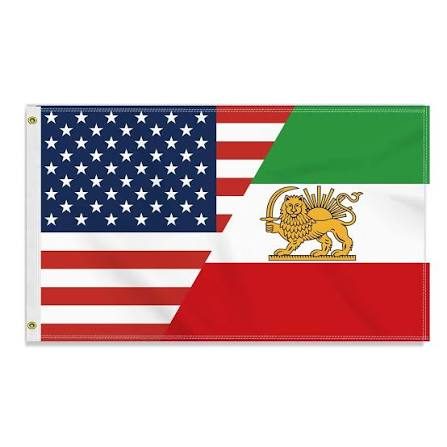
90 Years of Iran
The history of Persia spans thousands of years and includes some of the world’s earliest and most influential empires. The Achaemenid Empire, founded by Cyrus the Great in the 6th century BCE, became one of the largest empires in history. Persia later saw the rise of the Parthian and Sassanian Empires before being conquered during the Islamic expansion in the 7th century. Over time, Persian culture, language, and identity endured through various dynasties.
The transition from Persia to Iran was not the creation of a new country, but rather a shift in how the nation was identified internationally. The people of the country had long referred to it as “Iran,” meaning “land of the Aryans.”
In 1935, Reza Shah Pahlavi formally requested that foreign governments use the name Iran in diplomatic correspondence. This change was part of a broader effort to modernize the nation, assert independence from foreign influence, and emphasize a unified national identity rooted in its ancient past.
Ultimately, the shift symbolized more than a name change—it reflected nationalism, modernization, and a desire to define the country on its own terms rather than through a Western lens.
From 1935 to 1953, Iran experienced major political and social transformation under the Pahlavi dynasty. Reza Shah Pahlavi pushed modernization—expanding railroads, education, and a more secular legal system—while reducing the public role of religion. In daily life, especially in cities, many Iranians adopted more Western-style clothing, education, and cultural practices, though rural areas remained more traditional.
In 1941, during World War II, Allied forces occupied Iran, and Reza Shah was replaced by his son, Mohammad Reza Shah Pahlavi.
In the early 1950s, Mohammad Mossadegh rose to power, reflecting growing nationalism. Iranian society at the time was mixed—urban populations tended to be more moderate and secular, while rural communities remained deeply religious and traditional, creating a dynamic but sometimes tense cultural balance.
The 1953 overthrow of Iran’s government, known as 1953 Iranian coup d'état, involved key domestic and international players. Iran’s Prime Minister Mohammad Mossadegh had nationalized the oil industry, challenging British control. In response, Central Intelligence Agency and MI6 collaborated to remove him, fearing both economic loss and potential Soviet influence during the Cold War.
The purpose of the operation was to restore Western influence over Iranian oil and maintain Iran as a stable, anti-communist ally. The coup reinstated the authority of Mohammad Reza Shah Pahlavi, who had briefly fled the country.
The outcome was the removal of Mossadegh, the strengthening of the Shah’s rule, and the establishment of a more authoritarian government. In the long term, it fueled resentment toward the United States and Britain, contributing to tensions that would later play a major role in the Iranian Revolution.
After the 1953 Iranian coup d'état, Mohammad Reza Shah Pahlavi consolidated power and increasingly ruled in an authoritarian manner. While he promoted modernization through the White Revolution—expanding education, land reform, and women’s rights—political opposition was suppressed. Central to this control was SAVAK, the regime’s intelligence and security agency, which monitored dissent, censored opposition, and was widely accused of torture, imprisonment, and execution of political critics.
In daily life, many urban Iranians experienced modernization and economic growth, but political freedoms were limited. Corruption, inequality, and the concentration of wealth among elites fueled growing frustration. Religious leaders, including Ruhollah Khomeini, criticized the Shah’s Westernization and lack of political legitimacy.
By the late 1970s, resentment had spread across multiple segments of society—students, intellectuals, workers, and religious communities. This convergence of grievances, combined with repression and economic strain, led to widespread protests in 1978, setting the stage for the collapse of the monarchy and the coming revolution.
The chain of events that reshaped U.S.–Iran relations began with the Iranian Revolution, which brought down the regime of Mohammad Reza Shah Pahlavi. Years of authoritarian rule, repression by SAVAK, and resentment over Western influence fueled a broad coalition of opposition. This movement ultimately elevated Ruhollah Khomeini, who established an اسلامی Republic grounded in religious authority and anti-Western sentiment.
Tensions with the United States escalated dramatically in November 1979 with the Iran hostage crisis. Iranian militants seized the U.S. Embassy in Tehran, taking 52 American diplomats and citizens hostage. The crisis quickly became a defining moment in global politics and American public life. Nightly news coverage kept the situation constantly in the public eye, most notably through the program that would become Nightline, which began as a special report tracking the number of days Americans were held captive.
In April 1980, the United States attempted a military rescue mission known as Operation Eagle Claw. The operation ended in failure due to mechanical problems and a deadly collision in the Iranian desert, killing eight American servicemen. This failure further damaged confidence in Jimmy Carter’s leadership.
At the same time, the U.S. was struggling with high inflation, economic stagnation, and a broader sense of uncertainty. The hostage crisis became symbolic of what many Americans viewed as declining global influence and ineffective leadership. These conditions contributed to the political environment leading into the 1980 election, where Ronald Reagan capitalized on public frustration, projecting strength and a renewed sense of national confidence.
The crisis ended on January 20, 1981, the day Reagan was inaugurated, when the hostages were finally released after 444 days in captivity. The timing reinforced perceptions of a shift in American leadership and marked a turning point in both U.S. domestic politics and its relationship with Iran for decades to come.
After Ronald Reagan took office in 1981, the Middle East became a major focus of U.S. foreign policy, particularly in response to the ongoing Iran-Iraq War. Iran, under its Islamic Republic, had become increasingly religiously conservative, with the government emphasizing Shiite clerical authority in politics, law, and daily life. The revolution’s ideology alarmed neighboring Iraq, where Saddam Hussein, a secular Arab nationalist, feared the spread of revolutionary Shiite ideas to Iraq’s own Shiite population. In September 1980, Hussein invaded Iran, igniting a brutal war that would last eight years.
The Reagan administration, aiming to contain Iran’s influence and maintain regional stability, tilted U.S. policy in Iraq’s favor. The United States provided intelligence, dual-use technology, economic assistance, and facilitated arms transfers indirectly, even though Iraq also received major weapons from the Soviet Union, France, and China. By supporting Iraq, the U.S. sought to prevent an Iranian victory without directly entering the conflict.
This support helped Iraq sustain its war effort into the mid-1980s, while Iran faced an international arms embargo. The war caused massive casualties and destruction, deepened regional rivalries, and solidified Iran’s commitment to religious‑political governance, while demonstrating U.S. willingness to back authoritarian regimes strategically when it aligned with American interests.
After 1985, U.S. policy in the region became even more complicated with the secret Iran‑Contra operations. Despite publicly maintaining an arms embargo against Iran, senior Reagan administration officials authorized covert arms sales to Iran, often using Israel as an intermediary to deliver U.S.-made weapons. The ostensible goal was to secure the release of American hostages held by Iran‑linked groups in Lebanon, but only a few were freed, and much of the payment from Iran was secretly diverted to fund the Contras in Nicaragua, violating U.S. law.
At the same time, the United States continued selling arms and providing intelligence to Saddam Hussein’s Iraq to prevent an Iranian victory, effectively supporting both sides of the conflict. This dual-track strategy illustrated Washington’s priority of containing Iranian influence and maintaining regional stability over ideological consistency.
This support helped Iraq sustain its war effort into the mid-1980s, while Iran faced an international arms embargo. The war caused massive casualties and destruction, deepened regional rivalries, and solidified Iran’s commitment to religious‑political governance, while demonstrating U.S. willingness to back authoritarian regimes strategically when it aligned with American interests.
When the Iran–Iraq War finally ended in 1988 under United Nations resolution mandates, Iran was left physically and economically devastated. The war had consumed roughly a decade of national life, claiming hundreds of thousands of lives, destroying infrastructure, and draining national resources. Iranian cities, industrial zones, and agricultural regions faced extensive damage, leaving reconstruction as a central government priority. The economy struggled with inflation, unemployment, and limited access to international trade due to wartime sanctions and isolation.
Politically, the Islamic Republic emerged with its core institutions largely intact and its religious‑political leadership unchallenged, reinforcing the role of clerics and the Islamic Revolutionary Guard Corps in governance. The war experience strengthened nationalistic narratives tied to resistance and martyrdom, deepening the regime’s ideological legitimacy among many Iranians. Internationally, Tehran remained isolated from Western governments but sought to extend influence through regional alliances and support for sympathetic movements and non‑state actors. Iran’s emphasis on self‑sufficiency and resistance diplomacy shaped its foreign policy in subsequent decades.
When Saddam Hussein invaded Kuwait on August 2, 1990, Iran’s reaction was cautious and principled. Unlike most Gulf states and Western governments, which quickly condemned the invasion and formed a U.S.‑led coalition, Tehran took a stance emphasizing respect for national sovereignty and non‑aggression. Iran saw Iraq’s action as another example of aggressive expansionism following its brutal eight‑year war with Iraq that had ended in 1988.
Iran refrained from joining the Western coalition and did not support Saddam’s annexation. Instead, it favored a diplomatic resolution through the United Nations and urged other governments to uphold international law regarding territorial integrity. Tehran’s position reflected both ideological opposition to unilateral aggression and pragmatic concern about instability on its own borders.
While Iran did not align itself with the U.S. coalition, it also did not actively oppose efforts to liberate Kuwait. The government was wary of entanglement with Western military forces but publicly backed U.N. Security Council resolutions demanding Iraq’s withdrawal, highlighting differences between revolutionary rhetoric and strategic caution amid shifting regional dynamics.
After the 1991 Gulf War, Iran emerged from its long conflict with Iraq weakened but still politically unified under the Islamic Republic. Tehran declared neutrality during the liberation of Kuwait, wary of provoking further conflict on its borders, but it also saw opportunities to improve bilateral ties once the common threat of Saddam Hussein diminished. Iran’s leadership focused on reconstruction, economic survival, and regional influence, particularly through cultivating ties with Russia and other non‑Western powers to offset U.S. dominance in the Gulf. Tehran also began modest cooperation with Russia on military and nuclear technology, including the Bushehr nuclear plant, as part of broader diplomatic engagement following the Soviet collapse.
Domestically, Iran experienced rising tensions between conservative clerical authorities and reformist political movements, most visible with the election of President Mohammad Khatami in 1997. Khatami’s presidency encouraged limited domestic reform and a more open cultural atmosphere, including efforts to improve international relations—especially with Europe and, at times, the U.S. These overtures briefly eased some sanctions and created cautious optimism about diplomatic thaw, although deep mistrust remained on both sides.
U.S.–Iran relations during the 1990s were dominated by escalating sanctions and strategic distancing. The U.S. imposed targeted sanctions throughout the decade, including trade embargoes and legislation aimed at limiting Iran’s military capabilities. This reinforced Iran’s self‑image as a besieged state resisting Western pressure, narrowing political space for sustained engagement.
Following the September 11, 2001 attacks, Iran publicly condemned the violence and offered sympathy for the U.S. While Iran ultimately did not align with broader U.S. policy in the region, it cooperated discreetly in the early stages of the Afghanistan campaign against the Taliban—a mutual adversary—by sharing intelligence and facilitating diplomatic contacts. Iranian diplomats also participated in the Bonn talks on Afghanistan’s future government.
However, this brief cooperation was overshadowed in early 2002 when President George W. Bush labeled Iran part of an “axis of evil,” dramatically worsening relations and reinforcing hardline positions in Tehran. By linking Iran with Iraq and North Korea, the U.S. political rhetoric undercut reformist efforts and bolstered conservative resistance to rapprochement.
Overall, from the post‑Gulf War period through the post‑9/11 era, Iran remained strategically isolated from the United States, economically challenged by sanctions, yet cautiously assertive regionally, and internally torn between reformist aspirations and conservative control.
After being labeled part of the “axis of evil” by President George W. Bush in 2002, Iran’s global position became increasingly defined by tension with the United States and its allies. The designation, framed around accusations of supporting terrorism and pursuing weapons of mass destruction, reinforced Tehran’s perception of being under Western siege. In response, Iran strengthened relationships with non-state actors such as Hezbollah and Hamas, providing financial support, training, and weapons. These alliances became part of Iran’s “Axis of Resistance,” positioning Tehran as a supporter of anti-Israel groups and a counterbalance to U.S. influence in the Middle East.
Regionally, Iran remained ideologically opposed to Israel, consistently criticizing its policies toward Palestinians and supporting groups resisting Israeli control. This stance bolstered Iran’s regional influence but also fueled ongoing conflict with Gulf States and Western nations. Domestically, the Islamic Republic maintained tight control, with clerical authorities balancing limited reformist pressures under presidents like Mohammad Khatami while sustaining the Revolutionary Guard’s influence in politics and the economy.
Internationally, negotiations over Iran’s nuclear program dominated Tehran’s diplomatic engagement. In July 2015, Iran reached the Joint Comprehensive Plan of Action (JCPOA) with the P5+1 nations (United States, United Kingdom, France, China, Russia, and Germany). The agreement imposed limits on uranium enrichment, reduced Iran’s stockpile of enriched uranium, and instituted extensive inspections by the International Atomic Energy Agency (IAEA) in exchange for sanctions relief. The deal represented a rare period of constructive engagement with Western powers, providing Iran with economic opportunities and partial reintegration into the global financial system.
Throughout this period, Iran’s combination of ideological steadfastness, sponsorship of Hezbollah and Hamas, and cautious engagement through the JCPOA defined its complex role on the global stage. Tehran projected regional influence while managing its fraught relationship with the United States, all while pursuing a nuclear program under strict international scrutiny and maintaining domestic political stability.
After the United States withdrew from the 2015 Iran nuclear deal (JCPOA) in 2018, Washington reimposed and expanded sanctions under the so‑called “maximum pressure” campaign, aimed at constraining Iran’s nuclear program and reducing its regional influence. Without the sanctions relief that the deal provided, Iran’s economy struggled under restrictions on oil exports, finance, and trade—amplifying domestic hardship and limiting diplomatic engagement. Tehran continued advancing its nuclear capabilities in the absence of a revived agreement.
During the COVID‑19 pandemic, Iran faced severe public health challenges, with widespread infections and economic strain exacerbated by ongoing sanctions. The pandemic placed additional pressure on Iran’s healthcare system and economy, slowing growth and contributing to internal discontent. (Though specific pandemic data aren’t always fully transparent, sanctions were widely reported to worsen access to medical supplies and economic capacity.)
Under the Joe Biden administration, the U.S. signaled interest in reviving nuclear negotiations, but talks faltered as Tehran demanded stronger guarantees and expressed mistrust of U.S. commitment after the prior U.S. withdrawal. Relations remained tense, and proxy conflicts in the region continued, with Iranian‑backed militias conducting attacks and the U.S. responding with limited strikes.
When the Hamas launched its deadly October 7, 2023 attack on Israel, Iran’s U.N. mission publicly called it a “legitimate defense against…occupation,” while denying direct involvement in planning the assault. Tehran’s long‑standing sponsorship of Hamas and the Lebanese group Hezbollah has cemented its role as a key supporter of armed resistance against Israel, but it also attracted heightened scrutiny and pressure from the U.S. and Gulf partners.
Following October 7, Iran’s regional posture hardened: it coordinated with allied militias and employed a “unity of fronts” strategy to exert pressure on Israel from multiple directions, while cautiously avoiding full‑scale war—though direct engagements and reprisals increased. At the same time, some analysts noted Iran’s overarching goal was to influence cease‑fire negotiations and sustain support for allied groups despite military setbacks.
On January 21, 2025, Donald J. Trump was inaugurated as the 47th President of the United States. From the outset, his administration adopted an aggressive stance toward Iran, framing Tehran as a destabilizing force in the Middle East and a threat to U.S. security. Trump emphasized Iran’s nuclear program, regional militancy, and support for proxy groups such as Hezbollah and Hamas. Diplomatic avenues from the prior JCPOA were effectively closed, and sanctions were expanded to restrict Iran’s oil exports, financial networks, and international trade. Tehran rejected U.S. conditions, viewing them as humiliating and one-sided, creating an environment of growing tension.
By mid-2025, intelligence reports indicated Iran had accelerated uranium enrichment at facilities such as Natanz and Fordow. In response, the United States and Israel coordinated precision airstrikes on Iranian nuclear installations, aiming to delay nuclear weapons development and degrade Tehran’s military infrastructure. Israel provided intelligence and support, while U.S. forces executed targeted strikes on uranium enrichment plants and related research facilities. Iran condemned the attacks as a violation of sovereignty, increasing military readiness and reinforcing Revolutionary Guard deployments. These strikes marked the first direct U.S.-Israeli assault on Iranian nuclear sites, significantly escalating regional instability and setting the stage for future confrontation.
During June and July 2025, Iran conducted missile and naval exercises in the Persian Gulf and along its borders, signaling defensive readiness. Domestic messaging emphasized resistance to foreign aggression, particularly from the U.S. and Israel, while Tehran reinforced support for regional proxies. Back-channel diplomatic efforts through European intermediaries were limited and ultimately ineffective in preventing confrontation. Energy markets reacted to the perceived threat to the Strait of Hormuz, highlighting the global economic stakes.
Throughout late 2025 and early 2026, Trump escalated rhetoric, repeatedly threatening decisive action if Iran continued nuclear development or proxy attacks. U.S. military forces were increasingly deployed to the Persian Gulf, while Iran’s leadership expressed defiance and warned of retaliation.
On February 28, 2026, tensions culminated in full-scale bombing operations targeting Iranian military and nuclear facilities. U.S. and Israeli forces struck uranium enrichment sites, research centers, and key military infrastructure to eliminate nuclear capabilities and reduce Tehran’s influence over regional proxies. Iran retaliated with missile attacks on U.S. and allied bases and closed the Strait of Hormuz, causing immediate disruption to global energy markets. Tehran framed the strikes as defending its sovereignty and vowed continued resistance.
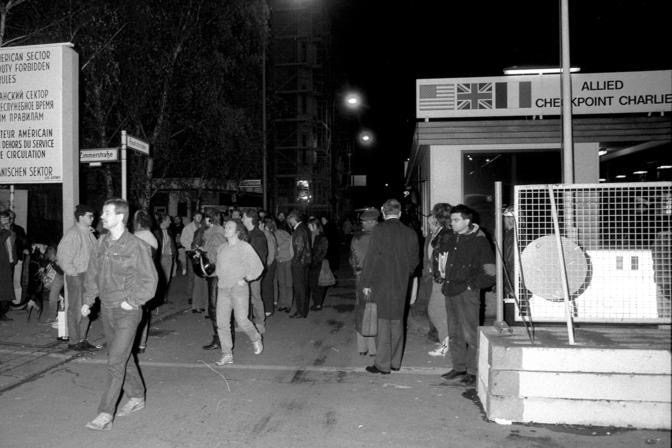
The Night the Wall Came Down:
I had arrived in West Berlin on Tuesday, November 7th, having driven from my duty station in Wildflecken, West Germany, through the Helmstedt–Marienborn transit corridor, the only highway connecting West Germany to West Berlin during the Cold War.
On the early evening of November 9th, I was sitting in a bar in West Berlin, enjoying a beer, when rumors began spreading. Someone said the East German government had announced new travel rules; someone else claimed the border might actually open. At first, it sounded impossible. For nearly three decades, the Berlin Wall had stood like an unbreakable scar across the city. But the murmurs kept growing, and something inside me told me I needed to see this for myself.
I made my way to Checkpoint Charlie, where crowds were already forming. People pressed close to the barriers, laughing nervously and talking excitedly. Some brought beers, others even champagne bottles, ready to celebrate whatever was about to happen. The East German guards looked uncertain, speaking into radios, clearly unsure of what to do. The tension in the air was electric.
Then suddenly, it happened.
It was impossible to tell who lifted the barriers—was it the guards finally giving in, or a brave soul pushing forward? All I know is that the gate opened. People poured through, climbing the wall, straddling it, and shouting, “Ein Deutschland! Ein Deutschland!”—One Germany! Men and women rushed up to me, hugging and even kissing me. Tears of joy and relief flowed everywhere, the emotion raw, uncontrollable, and utterly infectious.
Standing there, I realized I was witnessing the Fall of the Berlin Wall with my own eyes. My life has been blessed with many special moments, but that evening stands above them all. To say I was there, present at the moment the wall symbolically fell, is a memory I will cherish for the rest of my life.